


Whether an automation solution delivers real value to a hotel – and makes it future-proof – comes down to a single question: how deep, clean, and reliable is its integration into the PMS? That alone determines which use cases can even be implemented, whether the solution adapts to the hotel’s processes (or the hotel has to adapt to the solution), and how quickly new requirements can be rolled out.
Only a deeply integrated solution can fully automate the guest journey. Anything less only covers parts of it – and leaves exactly the value on the table that automation was meant to deliver in the first place. What advanced use cases become possible with deep integration is best illustrated by Hotelbird’s integration depth with Apaleo and Oracle OPERA Cloud, and by the Motel One example, where the guest journey has been comprehensively automated with Hotelbird.
Why isn’t a standard solution enough for hospitality?
No two hotels operate the same way. PMS landscape, internal workflows, legal requirements, guest expectations, and service concepts all differ from property to property. That means an automation solution that works out of the box, identically, in every hotel simply can’t deliver the same value everywhere.
Many automation solutions only cover the standard use cases of the guest journey – the basic check-in itself, for example – and hit their limits as soon as things get more complex or requirements become more granular, such as differing rules around registration forms or how the city/visitor tax is calculated.
The result is always the same: the hotel ends up automating only part of its guest journey. The rest stays manual work, or the hotel bends its own processes to fit what the tool is able to automate. Either way, the value that automation was supposed to unlock goes unused – and the hotel is left running a solution that never truly fit its operations.
That points to the real requirement hoteliers should keep in mind: a good automation solution adapts to the hotel – not the other way around – while automating completely, cleanly, and reliably.
Deep vs. surface-level PMS integration: what’s the difference for hotels?
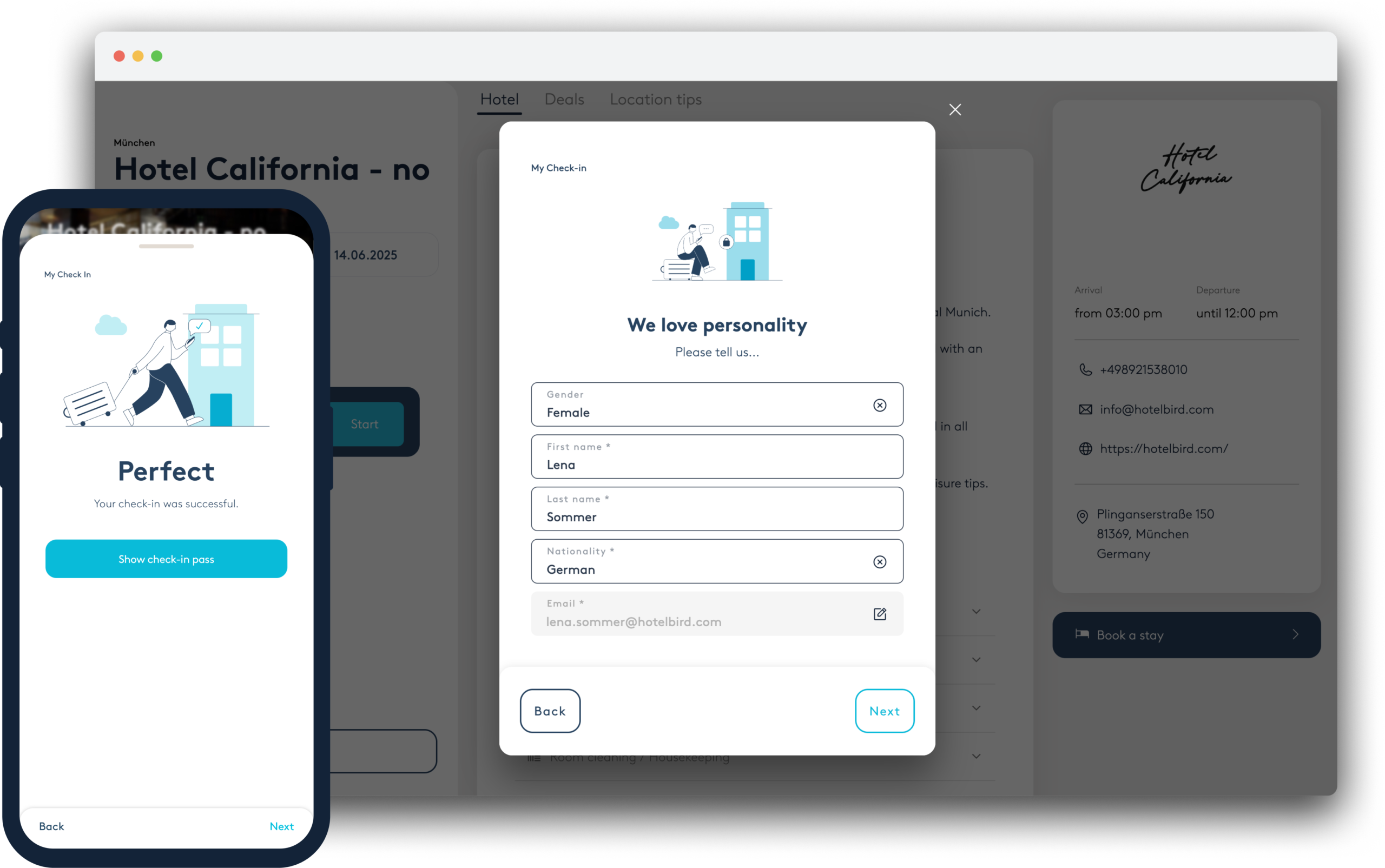
An automation solution is only ever as powerful as its connection to the PMS. The difference comes down to the depth of the actual system integration: a surface-level integration only accesses individual standard PMS functions. A deep integration uses the full range of the interface and can read and sync booking, payment, and process data – right down to custom fields and individual codes.
This difference shapes everything that follows. With a surface-level connection, only standard cases can be handled. Every deviation – a different room-assignment logic, hotel-specific routing of payment items, a local tax rule, automatic profile matching to avoid duplicates, or recognizing repeat guests –requires custom development, comes with compromises, and often still needs manual checking or follow-up work.
Deep integration flips this around: the hotel defines what it needs, and implementation follows quickly, because the technical foundation is already in place. The requirement comes first, not the pre-built function. That’s the point where automation actually delivers its value. Nothing has to be built in advance. Processes run the way the operation actually needs them to, instead of as a compromise or with manual workarounds. And the guest journey becomes fully digital – not partially, not with manual leftovers. Only then do you get real process optimization, cost savings, additional revenue, and a positive ROI.
Where integration doesn’t go deep enough, automation projects either fail or fall short of their potential – an avoidable blocker. The prerequisite for this is a modern, open PMS that technically allows for that depth. This is exactly where Hotelbird comes in.
Hotelbird, Apaleo, and Oracle OPERA Cloud: what use cases does the deepest PMS integration enable?
Hotelbird deliberately works only with market-leading PMS providers: its integrations with Oracle OPERA Cloud and Apaleo achieve a level of integration depth that goes far beyond partial or standard implementation. The result for the hotel: use cases are implemented precisely to fit its own processes, and quickly – without requirements first needing to be developed, without compromises, and without extra effort on the hotel’s part.
Concretely, that means even advanced use cases along the entire guest journey are covered. Six examples that deliver particular value for many customers:
1. Group check-ins
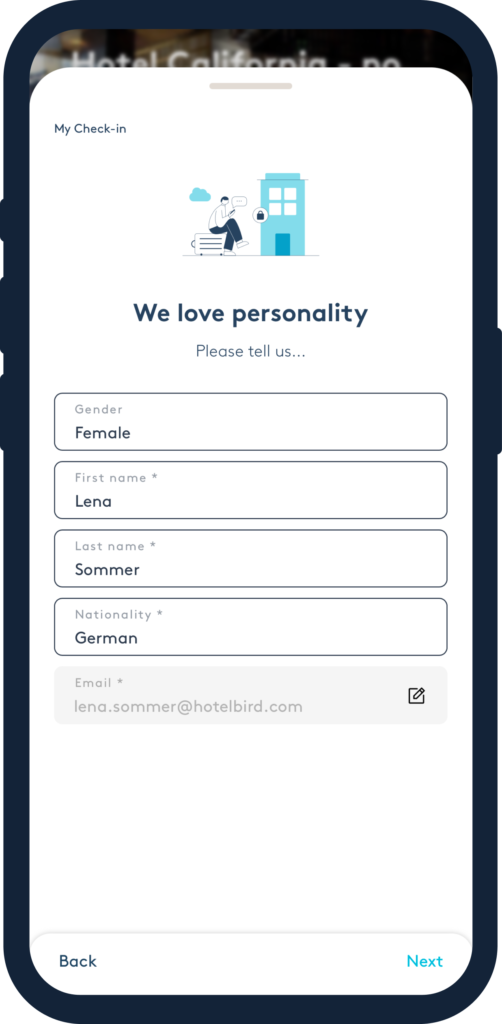
Groups check in automatically via guests’ stored email addresses, just like individual travelers — with no manual work required at the front desk.
2. Room allocation
Hotelbird assigns rooms according to both hotel and guest preferences – check-in follows the property’s actual workflow instead of a generic standard.
3. Routing to payment windows
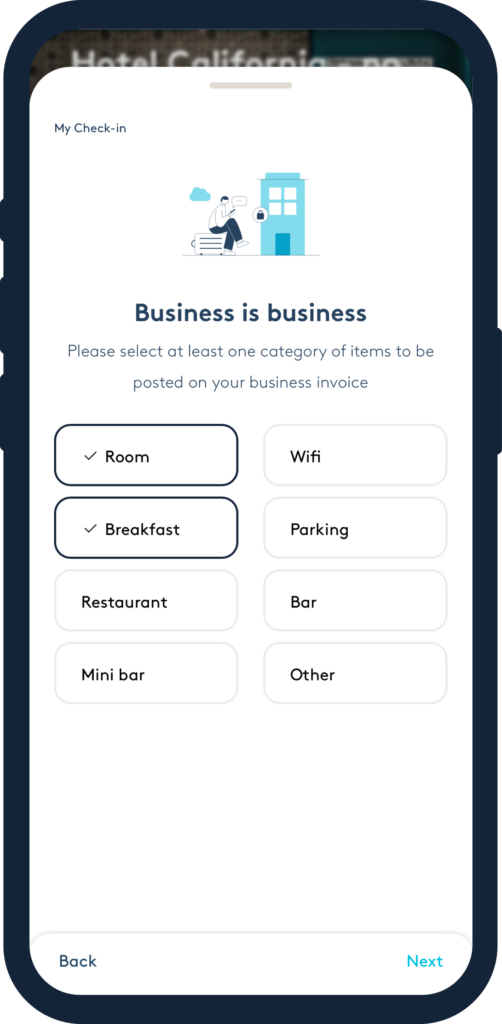
Payments flow back into the PMS in real time and are automatically routed to the correct billing window, with no manual reconciliation needed.
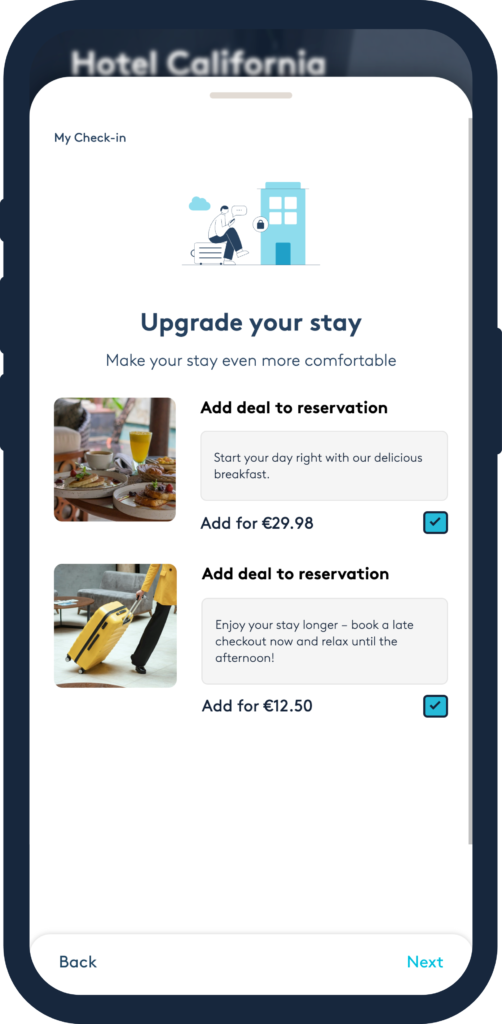
4. Automated Upselling
Upselling offers are automatically presented as part of check-in, with payment routed correctly – the additional revenue often pays for the solution within the first month.
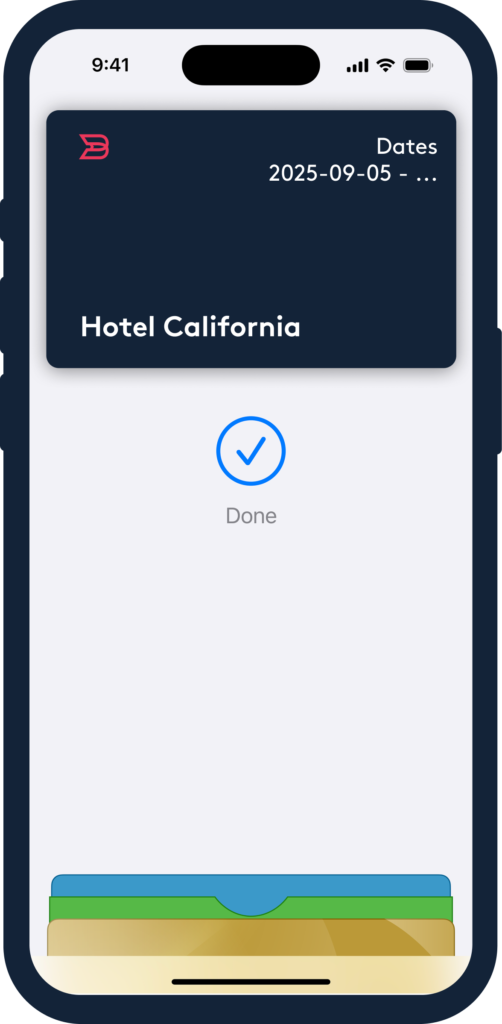
5. Wallet Key
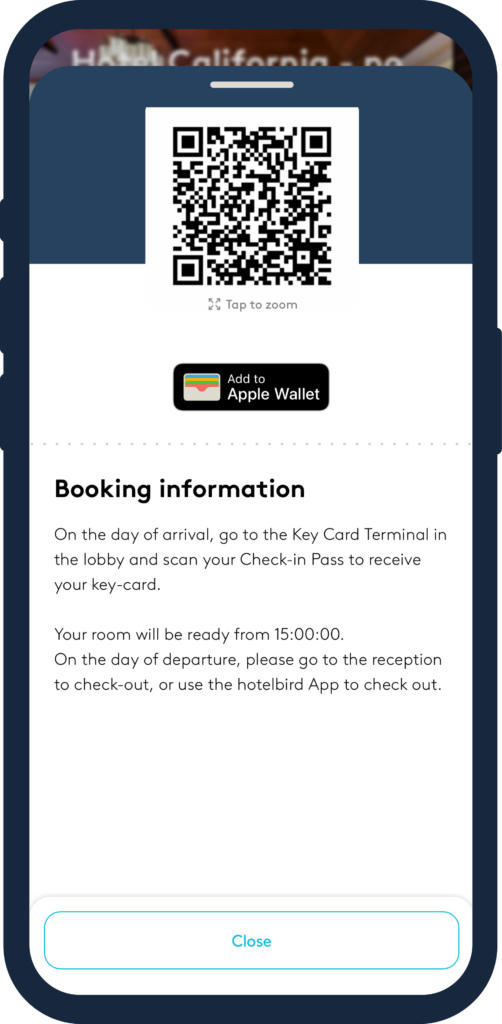
Guests get reliable, secure 24/7 access via their digital wallet – no app, no internet connection, and it even works with a dead phone battery.
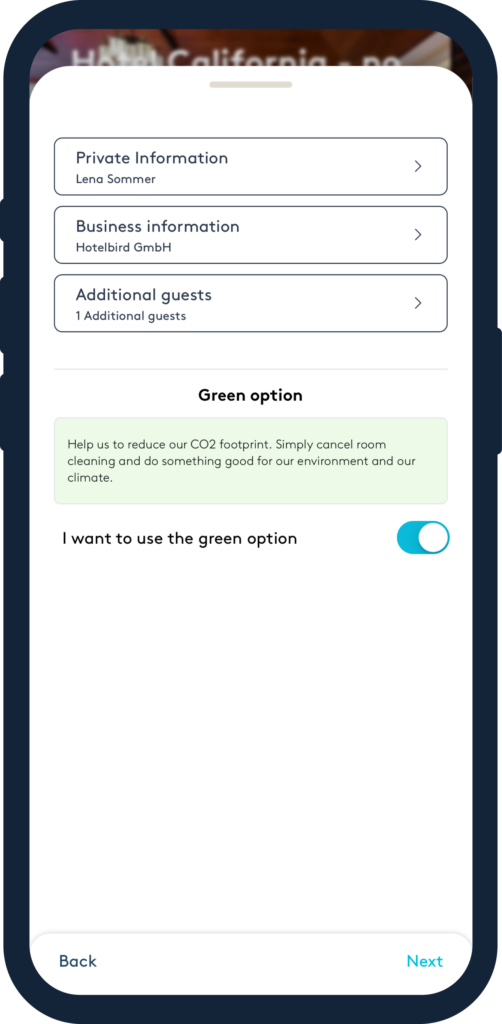
6. Green Option
Hotelbird passes a guest’s decision to skip room cleaning automatically and seamlessly through to housekeeping – with no manual handoff needed from front office to housekeeping.
The key difference compared to less integrable solutions: with Hotelbird, none of these use cases is a special case. The hotel gets automation that matches its individual setup without anything needing to be custom-built each time — requirements build on an integration depth that already exists. The numbers Hotelbird customers achieve show that this pays off:
- Up to 95% automated pre-check-in rate
- 90% fewer administrative tasks in the front office
- An average of 8 extra minutes per guest for the team
What’s possible with a fully integrated solution is shown by the success story with Jaz in the City Amsterdam, as well as the results from automated upselling at Althoff Hotels. These results don’t come from individual features – they come from the guest journey being covered end to end, not in pieces.

The Motel One example: how deep PMS integration enables advanced use cases in daily operations
Motel One shows what this looks like in practice. As a group with a budget-design concept that’s also an early adopter of smart hospitality technology, Motel One has different automation requirements than a labor-intensive luxury hotel – which raises the bar for integration depth and flexibility. Building on this integration depth, Hotelbird covers the following use cases for Motel One, among others:
Room allocation
Instead of a fixed top-down logic, Hotelbird now assigns rooms randomly across the entire property – taking booked categories and stored preferences into account.
Room Conditions during allocation
An additional layer of logic ensures that specific room conditions are also factored into the assignment.
Individual routing to folio windows
Motel One can define for itself which billing windows are used for which booking types, rather than always relying on the same windows – routing then runs automatically in the background.
Internationale Compliance
As a multinational chain, Motel One needs country-specific solutions – for registration forms and city/visitor tax, for example – something Hotelbird is increasingly automating.
Integration into the Motel One app
Motel One has offered its guests a proprietary digital guest journey via website and native app for years. Check-in and payment run through Hotelbird’s OpenAPI directly within Motel One’s own look and feel – proof that Hotelbird consistently adapts to the hotel, not the other way around.
The HOTEL AUTOMATION ROI Framework: 5 questions before you buy
Integration depth isn’t an isolated criterion — it’s the common denominator behind the questions that actually determine an automation solution’s ROI. If the goal is genuine operational return rather than just a modern look and feel, the evaluation questions shift. These five should be asked before introducing any new tool:
1. Coverage
Which use cases does it handle – including the complex ones (group bookings, split invoices) that cost front-desk teams the most time? Does the data really flow end-to-end?
2. Residual manual work
Is there any manual step left in the process, no matter how small?
3. Tima saved
How much time does it remove across the full daily routine, not just at one touchpoint?
4. Consolidation
Can existing tools be replaced with fewer, deeper integrations?
5. Compliance & error
Does the setup reduce human error and ensure legal compliance automatically?
A tool that scores well on all five doesn’t just offer a digital check-in option. It makes the operation leaner, more reliable, and measurably cheaper to run.
→ Learn more about hotel automation ROI
Frequently asked questions about hotel automation
Why is integration depth so important in hotel automation?
It determines which use cases can be implemented, whether the solution adapts to the hotel’s processes, and how quickly new requirements can be rolled out – and with that, the actual value automation delivers.
Why isn’t a standard solution enough?
Common offers include breakfast, late check-out, parking, room upgrades, and spa treatments. Hotels define the offers, prices, and availability themselves, and can also customize them individually per property.
Does automated upselling require additional staffing?
No. This is one of the key advantages. Instead of the front desk manually promoting offers and handling requests, Hotelbird automatically presents relevant offers at the key touchpoints – reducing staff workload while generating revenue at the same time.
Which use cases are possible with Hotelbird, Apaleo, and Oracle?
These include different room-assignment logics, group check-ins, real-time payment write-back to the PMS, data-driven upselling, Wallet Keys, and the Green Option.
How can I tell whether an automation solution is deeply integrated enough?
By using the five questions from the Hotel Automation ROI Framework: coverage, remaining manual work, time savings, consolidation, and compliance and error prevention.